About 1 in 4 U.S. adults is a caregiver — and many are part of the sandwich generation, juggling their careers, raising kids, and caring for aging parents all at the same time.
So last week we gathered IRL for In The Middle of It All, a candid conversation with trusted voices on navigating the everyday realities of caregiving, together with Pacira BioSciences.
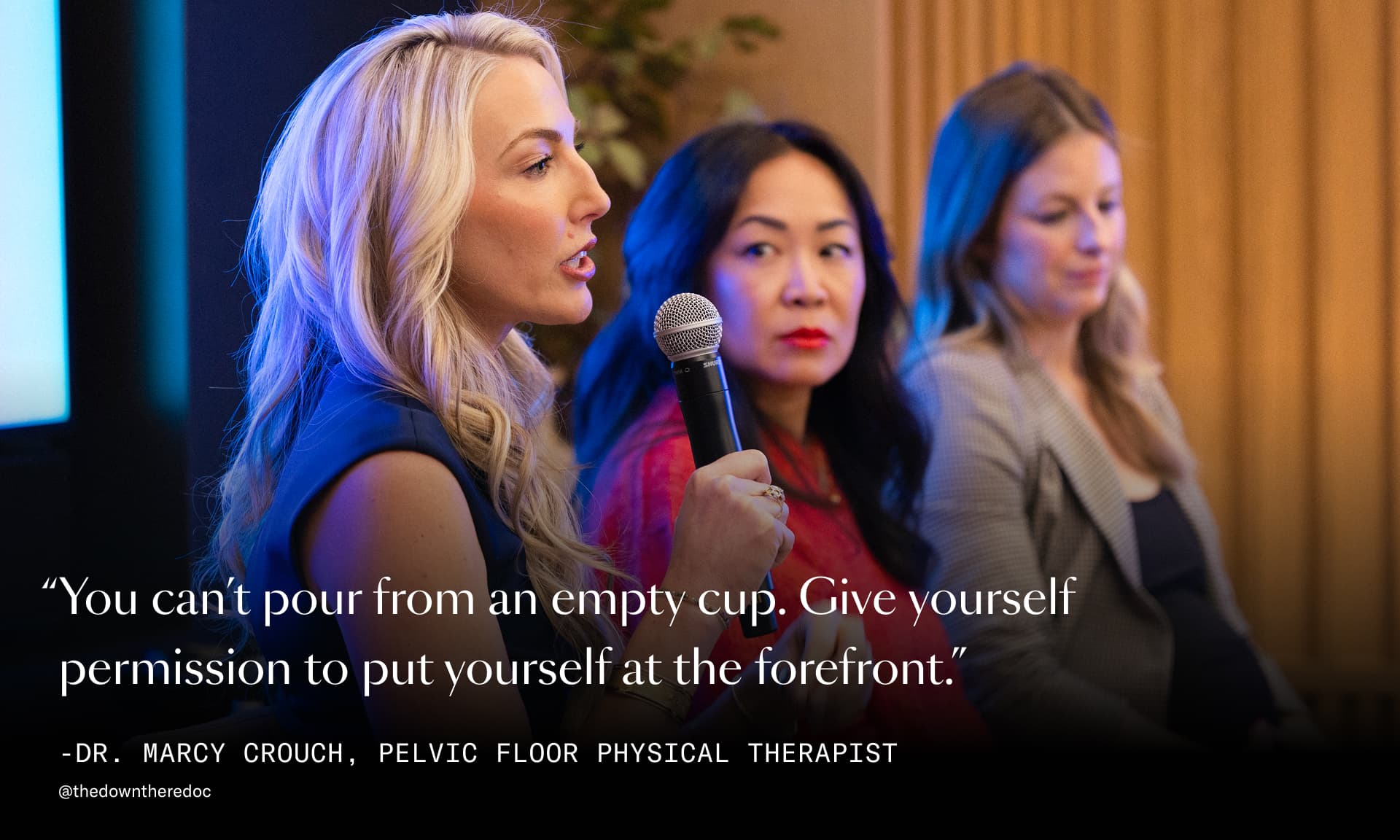
theSkimm’s Kamini Ramdeen-Chowdhury chatted with Dr. Marcy Crouch, a pelvic floor physical therapist (@thedowntheredoc), Alyce Chan, a stand-up comedian and content creator (@momcomnyc), and Caitlin Wilder (@wilderbeginnings), a doula and postpartum expert.
Our experts want caregivers in the sandwich generation to know how to advocate for themselves and their loved ones, make informed decisions about procedures and recovery, prioritize their own needs (even when it feels impossible), and lean on their communities for support.
1. You can't pour from an empty cup
“The sandwich generation feels more like a pressed panini generation. When you’re in the middle of it, you really feel the pressure from both sides,” says Caitlin.
If you’re a caregiver , you probably put everyone else’s needs before your own.. “If I’m not thinking about my mom, I’m thinking about my kids. If I’m not thinking about my kids, I’m thinking about my dog,” explains Alyce. “I do put myself on the back burner a lot. It’s mentally exhausting.”
Caregiving goes far beyond cooking, cleaning, and school drop-off. It often means juggling medical decisions, tracking procedures and appointments, asking the right questions at the doctor’s office, and navigating recovery and pain management. And when the majority of the load falls on one person, it can affect the quality of care.
That’s why it’s so important to take time for yourself, even if it’s just a few minutes. “Sometimes you don’t have time to fill your cup in a really big way,” notes Caitlin. “If all you can do is take a shower, can you make it the best shower ever? Doing something small for yourself during the day can really turn the beat around.” Translation: Taking care of your own needs can help you be more present for your loved ones in the long run.
2. Do Research and Understand Your Options In Advance
Coming prepared to doctor’s appointments isn’t just helpful, it can shape how a procedure, recovery, and pain management experience unfolds for everyone involved.
“Start asking questions immediately about what your options are, what the recovery’s going to look like, and what the pain management plan is going to be,” advises Dr. Marcy. “It affects everyone. It’s not just the patient; it’s the whole support system that’s working together as a team.”
For caregivers in the sandwich generation, those decisions often happen across multiple scenarios at once, whether you’re helping a parent prepare for surgery while also navigating a child’s sports injury or procedure. And while the procedure itself may be brief, the recovery period is where caregivers are often most involved: managing medications, coordinating follow-ups, adjusting routines, and supporting day-to-day needs at home.
That’s why understanding what recovery will actually look like — from mobility limitations to pain management options — is key. “Sometimes there are more options than what the doctor’s telling you, especially with non-opioid pain medications,” says Caitlin. “The doctor might not bring that up right away and you have to be the one doing that research in advance, knowing the questions to ask, knowing what else is out there, and advocating for your parents the same way you would for your kids.”
Taking the time to ask questions early can help you plan ahead, set expectations, and feel more confident supporting your loved one through recovery, not just on day one, but in the days and weeks that follow.
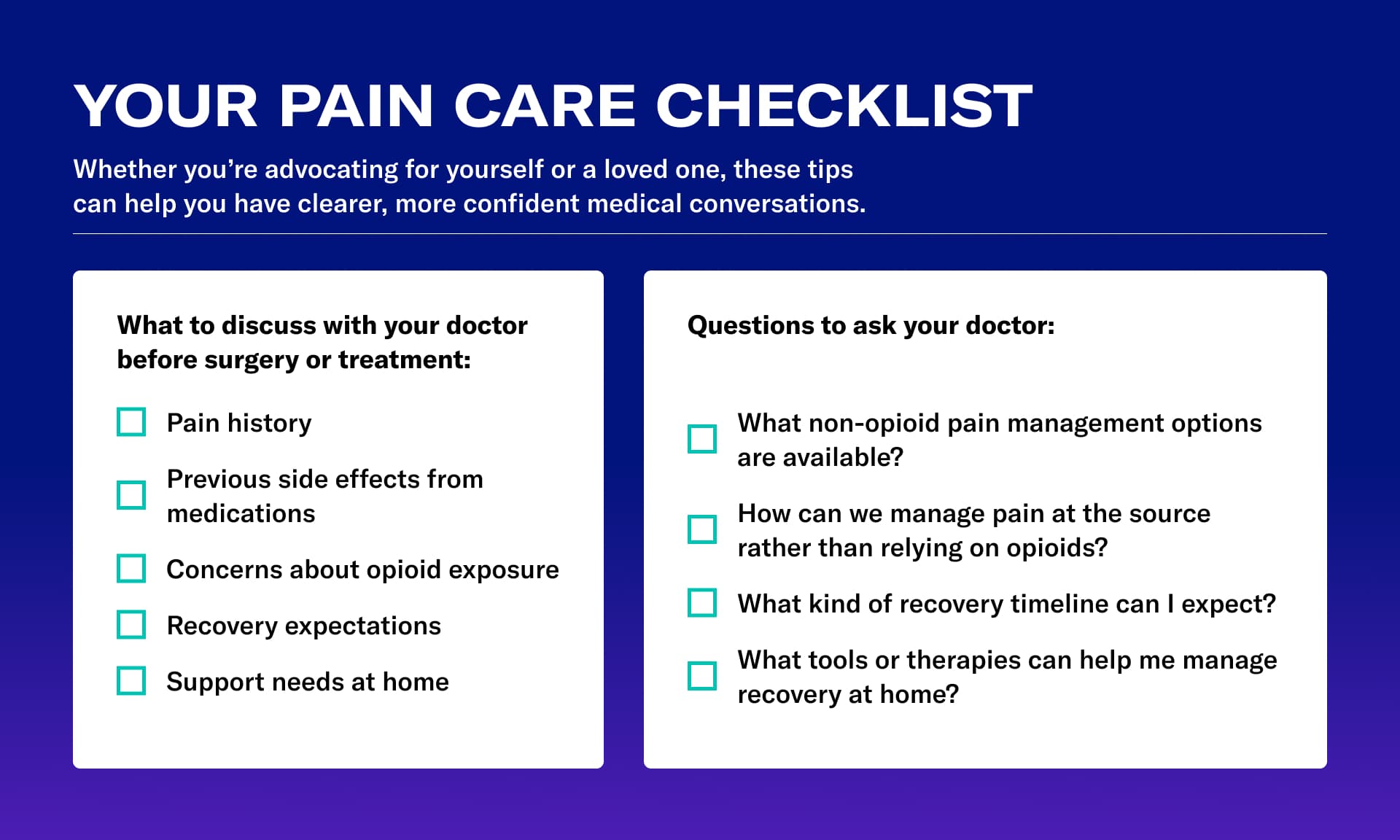
Psst…not sure where to start? Enter: the pain care checklist. This guide can help you have clearer, more confident medical conversations with a provider.
3. You Can’t Do it All — And That’s OK
With all of the invisible labor that comes with caregiving, “doing it all” isn’t realistic.
“I lean into the fact that I can’t do it all and I’m not trying to do it all,” says Caitlin. “ When my mom had hip surgery, I had to go help her and I missed my kid’s picture day at school. Sometimes you have to pick what feels the most important at the moment.”
While you can’t plan for everything, thinking ahead can make a big difference, especially when it comes to recovery. “You can’t really prevent a lot of these things,” explains Dr. Marcy. “But I wish everyone knew what all of the options are when making decisions for your family. Not just for pain management, but also resources you might need, or a support system you might have, and getting all that into place early. You can have a better experience knowing you’ve asked the questions, that you’ve gotten other opinions, and you know you have other options.”
4. Caregivers Need TLC, Too
A lot of attention goes to the person receiving care. But don’t forget about the people giving it — they need support too.
“You’re not just caring for the person going through the medical concerns, you’re also caring for the caregiver. The main caregiver can often be forgotten,” says Caitlin. “There are so many more people that it affects.”
Looking to show up for another caregiver in your life? Skip “How can I help?” and get specific. “I’m bringing dinner.” “I’ll pick up your meds.”
“Don’t ask, just do it,” says Alyce. It cuts the mental load — and lets you help right away.
theSkimm
Being in the sandwich generation can be a lot, but doing your research and understanding your options can help lighten the mental load and help you feel more in control of the process. Because caregiving isn’t just about showing up; it’s about helping guide every step of the journey, from the first appointment to recovery and beyond. And don’t forget: Taking care of yourself matters, too.
Live Smarter
Sign up for the Daily Skimm email newsletter. Delivered to your inbox every morning and prepares you for your day in minutes.